
Union Minister of Commerce and Industry Shri Piyush Goyal Calls for Trained Caregivers and Wider Hospital Participation in Heal in India Gateway

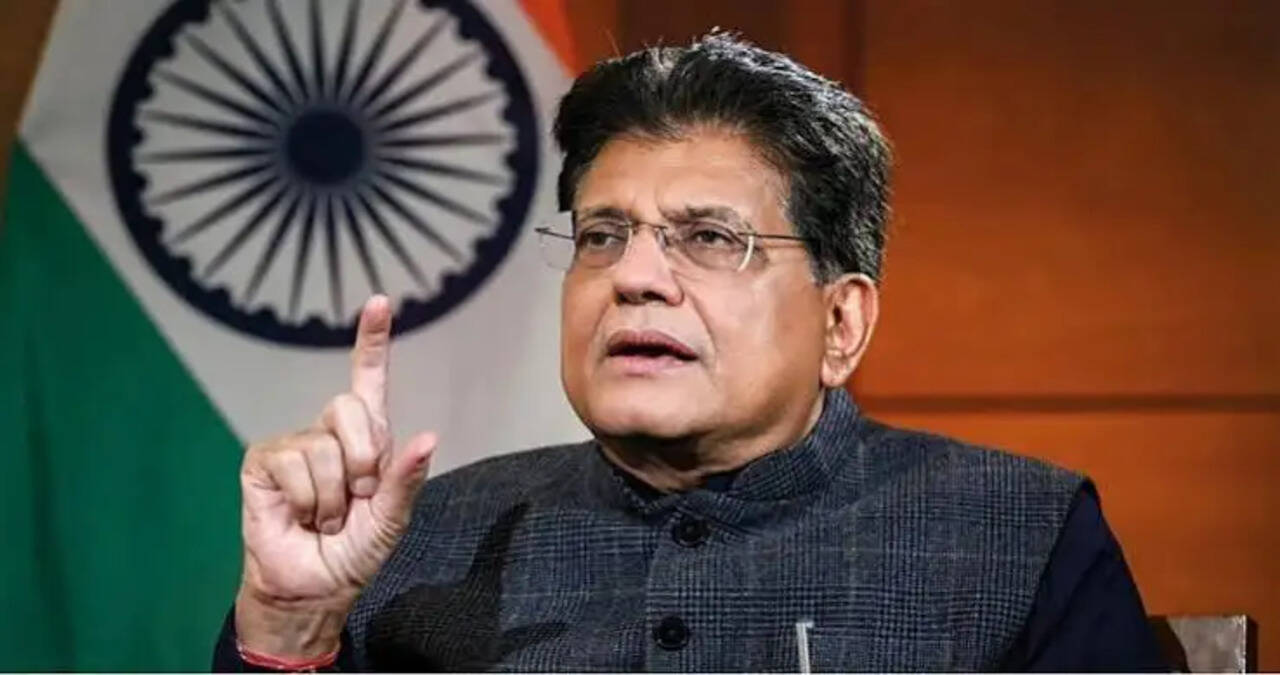

Union Minister of Commerce and Industry Shri Piyush Goyal today outlined a five-point action plan to strengthen India’s medical value tourism ecosystem and position the country as a gateway for international health and wellness services with the highest quality standards. Addressing the inaugural ceremony of Sanjeevani 2026 at Bharat Health Global Expo 2026 in New Delhi, Shri Goyal said the first priority should be to train and certify caregivers and develop a skilled workforce capable of providing healthcare of international standards.
The second point, he said, should be to encourage more hospitals to join the Heal in India gateway and publish honest and transparent treatment packages. He stressed that hospitals must follow ethical practices and never attempt to cheat patients, as one wrong action can lead to loss of goodwill, business and credibility for India.
As the third point, Shri Goyal called upon insurers and health-tech companies to build products and platforms that make the patient journey more seamless, ensuring timely reimbursements and greater availability of cashless payments. He also suggested that teleconsultations and telemedicine could be incorporated in a big way as an initial part of the medical value tourism journey.
The fourth point was the need to organise exhibitions and presentations across the world, establish facilitators and tie-ups with hospitals globally, and ensure that only National Accreditation Board for Hospitals & Healthcare Providers (NABH)-enabled, verified and panelled hospitals are allowed to treat patients coming from abroad. He stressed that NABH must maintain the highest standards with zero compromise.
As the fifth point, the Minister urged States to focus on quality in hospitals and wellness centres, expand their networks, make good-quality facilities globally visible and market these facilities for the welfare of patients. He called for medical value tourism to expand beyond metropolitan cities to Tier-2 and Tier-3 cities, creating jobs, opportunities and infrastructure while also helping upgrade healthcare for Indian patients.
Shri Goyal also suggested creating a pool of interpreters for patients arriving from different countries and speaking different languages, so that they have greater confidence and communication between patients and the medical system becomes easier.
The Minister emphasised that quality healthcare cannot be different for Indians and foreigners. He said India must ensure that every Indian patient receives the same high-quality healthcare as anyone coming from across the world. He said the country must give to its brothers and sisters what it would wish to receive itself and provide the same quality of healthcare to every person from India or abroad, without discrimination between rich and poor.
Shri Goyal stressed that those who entrust their lives to India by coming here for treatment must be treated with the highest care, concern and compassion. He said patients travelling abroad for healthcare, whether from Africa, Asia, America or Europe, experience anxiety as they enter a new country and seek clarity, dignity, ethical best practices and high integrity. They place their trust in India at every stage of their healthcare journey.
Highlighting the potential of India’s medical value tourism sector, Shri Goyal said India has clinical excellence, advanced technologies and healthcare costs 60-80 per cent lower than in other parts of the world, particularly the developed world. He said India also has compassion in abundance and appreciated the care and concern demonstrated by medical professionals across the country, from small nursing homes and doctors’ clinics to large municipal, private and government hospitals, often while working under considerable constraints.
The Minister said India’s pharmaceutical industry, medtech sector, diagnostics, traditional medicines including Ayurveda, Yoga and Unani, doctors, technicians, nurses, caregivers and hospitals collectively constitute the country’s strength and can make medical value tourism a potent instrument for serving the world. He said the sector has the potential to take India to the world, earn goodwill and serve people globally while creating a huge number of jobs and business opportunities in the manufacture of drugs, medical equipment and consumables, delivery of these products, hospital infrastructure and employment for doctors, teachers, nurses, technicians and other professionals.
Shri Goyal said that while 3.5 million patients have benefited from India’s medical value tourism ecosystem in the last seven years, the country’s target should be 10 million patients a year. He said India has the ability, capability, right doctors and the right ecosystem to achieve this. He emphasised that high standards, ethics, integrity and honesty must be maintained and urged healthcare providers to go the extra mile in caring for international patients.
Referring to the changing global healthcare landscape, Shri Goyal said the world is ageing while India is young and that many new-age diseases are spreading across the world. Healthcare costs are increasing and many parts of the world face long waiting lists even for doctors’, dentists’ and radiologists’ appointments, along with shortages of tertiary care. He said countries with which India is engaging through FTAs and business discussions want high-quality pharmaceuticals, doctors, technicians, nurses and caregivers from India in large numbers.
The Minister underlined the importance of preventive healthcare and the wellness ecosystem, referring to Ayurveda in Kerala and its spread across the country, wellness centres in the hills, and the care provided by nurses and young men and women working in the healthcare system. He said India is the land which can serve best and urged stakeholders not to miss the opportunity presented by the medical value tourism sector.
Emphasising collaboration, Shri Goyal said the purpose of Bharat Health was to bring the entire fragmented healthcare sector together and called upon stakeholders to work as collaborators and in cooperation with each other as a team. Shri Goyal said the healthcare sector is a perfect example of the need for collaboration and cooperation, as even a small error can have serious consequences.
He said India must maintain high-quality benchmarks and make quality visible to patients. He called for the scaling up of medical value tourism while maintaining high standards and said India should become the gateway for international health and wellness services with the highest quality standards available anywhere in the world.
Shri Goyal said the world is looking to India for high-quality pharmaceuticals, doctors, technicians, nurses and caregivers, and that India has the potential to respond to this demand. He reiterated that the sector presents an opportunity to serve the world while creating economic opportunities and societal benefits.
On healthcare for Indians, Shri Goyal highlighted Ayushman Bharat, under which poor people and their families do not have to worry about healthcare expenses when someone falls sick, as the government pays for their healthcare. He also highlighted the provision for all persons above 70 years of age, irrespective of income, to receive an additional healthcare cover of ₹5 lakh.
Shri Goyal said India’s approach to healthcare has always been guided by the principle of serving the world. Referring to the Upanishadic expression “Sarvesantu Niramaya”, meaning “may all beings be free from illness”, he said India has never viewed healthcare only within the boundaries of the country and has for thousands of years regarded healthcare as a shared responsibility of the entire world. He described “One World, One Health” as part of this basic ethos.
Recalling India’s response during the COVID period, Shri Goyal said India provided vaccines free of charge to countries that could not afford them and supplied vaccines to others at very low cost. While vaccines from the developed world were sold for around 25-30 dollars, Indian vaccines were available at around 2-3 dollars a dose. Shri Goyal stressed that India never profiteered at the cost of somebody else’s misery.
The Minister recalled that when medicines required during COVID were available in India, Shri Prime Minister Narendra Modi decided to impose export restrictions on medicines being used at that time. He said that although very few medicines were proven for the treatment of COVID, paracetamol, certain other medicines, injections, injectables and consumables were required. He explained that export controls were introduced to safeguard India’s stock of medicines from being purchased or cornered by unscrupulous traders, certain companies or rich nations. Otherwise, only the rich could have received treatment while poorer and less-privileged populations, developing countries and India’s poor and lower-middle-class population could have been deprived of these medicines.
Shri Goyal said India not only ensured that everyone in the country who needed medicines received them, but also ensured equitable distribution of available medicines and equipment to countries across the world, whether rich or poor. More than 100 countries received medicines free of charge. He stressed that India did not profiteer from what it had and shared resources with others either free of charge or at cost.
Calling this the ethos of India, Shri Goyal said the third edition of Sanjeevani is bringing to the fore the potential contribution India can make to serve the country and the world. He said India must continue to ensure that healthcare for its own people is not compromised and referred to the various ways in which quality and timely healthcare are being made available.
The Minister also emphasised the importance of quality, ethics and integrity in the healthcare ecosystem. He said quality will determine the future of India and described the Quality Council of India as one of the most important organisations if India is to become a developed nation by 2047. He said maintaining high standards would be central to India’s future.
Shri Goyal stressed the importance of professional integrity in certification and said that the NABH system should be professionally run and free from influence. He stated that the Ministry or Government has not referred a single case and that the system is professionally managed. He urged stakeholders to complain if NABH or any certifying body engages in unethical practices and to approach the Ministry if such issues arise. He said the single largest focus of the Government is to eliminate corruption.
Shri Goyal concluded by reiterating that India must provide the same high-quality healthcare to every Indian patient as it provides to anyone coming from across the world. He said that just as every person wants the best healthcare for themselves and their families, it is the duty of the healthcare ecosystem to provide the same quality of healthcare to every single brother and sister from India or abroad, without discrimination between rich and poor.