
The memorial, built at a cost of ₹800 crore, will be opened to the public after its inauguration”: Anil Vij


Azadi ki Pehli Ladai ka Shaheed Smarak” is Ready in Ambala Cantonment; Prime Minister Narendra Modi to Inaugurate It Soon: Energy Minister Anil Vij
The history of the 1857 uprising has been showcased in 23 galleries, with the names of more than 700 brave freedom fighters from across the country inscribed in gold”: Vij
360-degree projection, sound and laser shows, and an open-air theatre with a seating capacity of 2,500 will be major attractions”: Vij
Chandigarh, October 13: Haryana Energy, Transport and Labour Minister Anil Vij said that the “Azadi ki Pehli Ladai ka Shaheed Smarak”, constructed at a cost of ₹800 crore in Ambala Cantonment, is now fully ready. Prime Minister Narendra Modi is expected to inaugurate this memorial, described by Vij as the largest of its kind in Asia, in the near future. It will be opened to the general public following the inauguration.
Vij said the memorial is not merely a monument for Ambala or Haryana but a national memorial for the entire country. It is dedicated to the sacrifices of the brave men and women who participated in the uprising of 1857 but whose contributions did not receive the recognition they deserved in history.
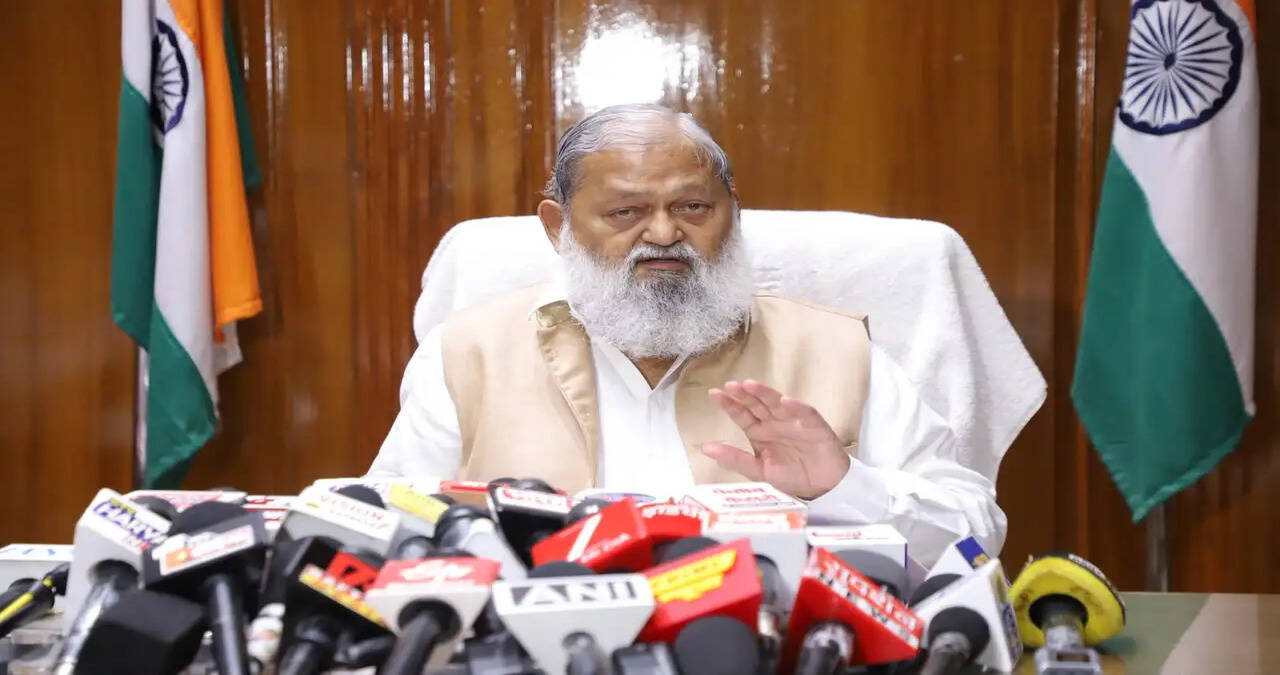
Vij was addressing a press conference in Chandigarh today. He said he salutes every individual who took even a single step outside their home to fight against British rule during the freedom struggle. At a time when the British Empire extended across a vast part of the world, countless Indians—including farmers, soldiers, women and children—laid down their lives for the country's freedom. Recognising and honouring their contributions is our duty, he added.
*An effort to bring the history of the 1857 uprising to the forefront*
Vij said history textbooks have often portrayed the Indian National Congress as the organisation that led the country's freedom struggle, whereas the Congress was established by A.O. Hume in 1885. Twenty-eight years before that, in 1857, a widespread armed uprising against British rule had taken place across the country. Despite the scale of this struggle, the stories and sacrifices of many of its participants remained largely unknown for a long time.
He said that during that period, British authorities shot many Indian freedom fighters after tying them to trees. Yet, they did not receive the tribute and recognition they deserved. The idea of establishing the memorial emerged from the need to give these unsung freedom fighters their rightful place in history.
The Energy Minister said he had raised the demand for the memorial during the tenures of previous governments as well. He had taken up the issue with the governments of the time during various sessions of the Haryana Legislative Assembly. According to Vij, former Chief Minister Bhupinder Singh Hooda had also agreed to the proposal on one occasion, but the project could not move forward.
Vij said that after the Bharatiya Janata Party government came to power in Haryana in 2014, he presented the relevant documents to then Chief Minister Manohar Lal and explained the need to establish the memorial in Ambala Cantonment. He emphasised that it was important to bring the early events of the 1857 uprising in Ambala to light so that their historical significance could receive national recognition.
*Memorial developed on the basis of historical documents and research*
Vij said Dr. K.C. Yadav, the then Head of the Department of History at Kurukshetra University, had referred in his research to the early developments of the 1857 uprising in Ambala Cantonment. Information and historical documents were also collected from other sources. The memorial presents the history of the struggle in Ambala, Haryana and various other parts of the country. A coffee-table book on the subject is also being prepared.
He said the uprising of 1857 spread across a wide geographical area. Historical accounts refer to the use of lotus flowers and chapatis to communicate messages during that period. Keeping this historical context in view, the memorial includes accounts of events that took place in different parts of the country.
To ensure the authenticity of the historical material, a committee comprising five eminent historians from across the country was constituted. Historical documents were also obtained from national archaeological institutions, a library in London and Lahore. The memorial's exhibits have been developed on the basis of these documents and research.
Referring to historical records relating to the 1857 uprising, Vij said accounts indicate that the conflict in Ambala began approximately nine hours before the revolt in Meerut on May 10, 1857. He also referred to the activities of soldiers of the 60th and 5th Native Infantry regiments and accounts recorded in official documents by British officers of the time.
He said various records, including the 1923–24 Gazetteer, had been studied to establish facts relating to the events of that period, the soldiers' revolt and the actions taken by the British administration.
*History of the 1857 uprising across the country showcased in 23 galleries*
Vij said the memorial comprises 23 galleries showcasing the events of the 1857 uprising in Ambala, Haryana, Meerut, Delhi, Punjab, Gujarat, Jhansi and other parts of the country. These galleries will familiarise visitors with the events of the period, the struggles of the revolutionaries and their sacrifices.
He said advanced technology had been incorporated into the memorial, including a 360-degree projection system designed to give visitors an immersive experience, making them feel as though they are standing among the revolutionaries and witnessing the historic period at close quarters. Sound and laser shows will also be organised.
A special gallery has been created to pay tribute to the martyrs. Visitors will be able to place their hands at a designated point and offer a digital tribute, with a record of the tribute being maintained.
Vij said the memorial had been conceptualised to help visitors experience the historical period of 1857 and understand the struggles of the freedom fighters. Research has so far identified the names of more than 700 brave freedom fighters, along with their fathers' names and villages. Their names have been inscribed in gold at the memorial. The names of other freedom fighters will also be added in the future as and when authentic information about them becomes available.
*Open-air theatre for 2,500 people and modern facilities*
The Energy Minister said an open-air theatre with a seating capacity of 2,500 people has been constructed within the memorial complex. An auditorium with a capacity of 300 people has also been established.
Visitors may require approximately six hours to explore the memorial in detail. For their convenience, arrangements have been made to organise visitors into groups of 40. A lift installed at the memorial, among the country's largest, will transport up to 40 people at a time from the first floor to the second floor, allowing them to view exhibits related to history and the revolutionary freedom fighters during their visit.
Vij said a 63-metre-high lotus-shaped structure has been built at the memorial, featuring two high-speed lifts. A sky café is also being developed at the top of the structure. A helipad has been constructed within the complex. He expressed hope that the memorial would attract large numbers of visitors from Haryana and other parts of India, as well as from abroad.
*Mobile app and website for ticket booking*
Vij said a mobile application has been developed to provide information about entry and tickets. Visitors will be able to book tickets online through the application and the memorial's website. Eight shops have been established within the complex to sell souvenirs and other memorabilia related to the memorial. Replicas of the memorial will also be available at these shops.
He added that a dedicated substation has been set up to meet the complex's electricity requirements, while a generator has also been installed as an alternative power supply arrangement.
*States invited to celebrate their State Days at the memorial*
Vij said letters had been sent to all states inviting them to organise their annual State Day celebrations at the national memorial. He said the initiative would provide people from different states with an opportunity to connect with the history of the 1857 uprising and learn about the sacrifices made by freedom fighters from across the country.
The Energy Minister said the primary objective of the Shaheed Smarak dedicated to the First War of Independence is to give due recognition and honour to the brave men and women who fought for India's freedom and sacrificed their lives.
The memorial will introduce future generations to their courage, sacrifice and patriotism, while offering visitors an opportunity to understand the history of India's freedom struggle in a broader historical perspective.