
State-level Vigilance and Monitoring Committee constituted under the chairmanship of the Chief Minister: Krishan Kumar Bedi

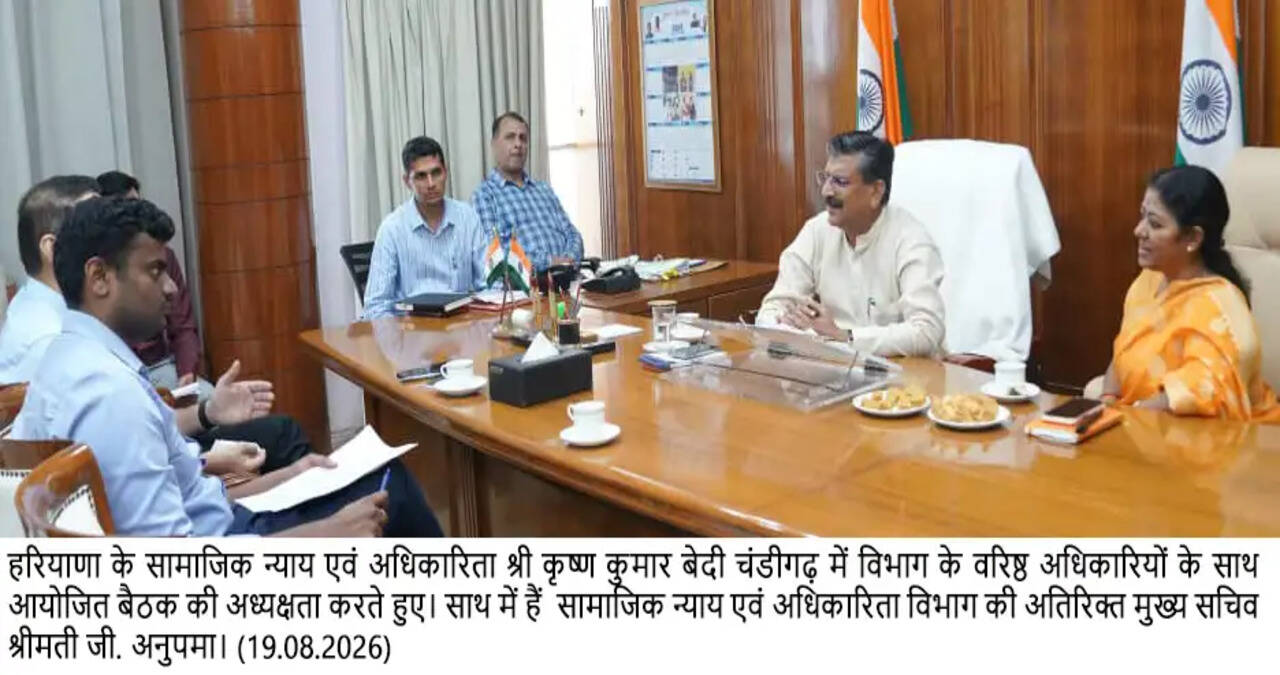

*Fee for legal rights of families affected by atrocities increased to Rs. 21,000*
Chandigarh, September 1 – Haryana Social Justice and Empowerment Minister Sh. Krishan Kumar Bedi said that under Rule 16 of the Scheduled Castes and the Scheduled Tribes (Prevention of Atrocities) Act, 1989, a State-level Vigilance and Monitoring Committee has been constituted under the chairmanship of Chief Minister Sh. Nayab Singh Saini. This committee reviews the implementation of the Scheduled Castes and the Scheduled Tribes (Prevention of Atrocities) Act, 1989, the relief and rehabilitation provided to victims, prosecution of cases under the Act, the role of various officers/agencies responsible for its implementation, and the reports received by the State Government.
Sh. Bedi was replying to a question raised on the third day of the Monsoon Session of the Assembly.
The Social Justice and Empowerment Minister informed that the Haryana Government and the police have taken several effective steps to reduce crimes against persons belonging to the Scheduled Castes and Scheduled Tribes in the State. The Chief Minister has taken the step of increasing the fee to Rs. 21,000 for securing legal rights for families of Scheduled Caste victims.
He informed that an SC/ST Protection Cell has been constituted at Police Headquarters, which is supervised by an officer of the rank of Additional Director General of Police/Inspector General of Police. This cell is responsible for the coordination and monitoring of registered cases. He informed that special cells have been established at the district and police station levels to ensure prompt registration of cases and fair and impartial investigation upon receiving information about caste-based atrocities.
He said that regular monitoring is carried out at the Police Headquarters level to ensure all aspects of investigation, including the timely arrest of accused persons.
Investigation of cases under the Scheduled Castes and the Scheduled Tribes (Prevention of Atrocities) Act, 1989, is being conducted by gazetted officers posted in regional units, namely officers of the rank of Deputy Superintendent of Police/Assistant Commissioner of Police. The Police Headquarters has issued directions to all regional units that investigations should be completed by the investigating officers in a time-bound manner.
Sh. Bedi further said that regular meetings are held at the district level to review the progress of investigations, so as to ensure accountability and effective compliance with the directions issued at the State level.
Besides, to ensure timely disbursement of compensation/monetary relief to victims, the Police Headquarters has issued directions to all regional units that copies of the First Information Report should be provided to the victim and the concerned District Welfare Officers immediately after registration of the case, so that monetary relief can be provided to the victims. In addition, the Scheduled Castes and the Scheduled Tribes (Prevention of Atrocities) Amendment Acts, 2015 and 2018, and the Protection of Civil Rights Act, 1955, have also been included in the curriculum of various promotion courses conducted at all training centres.
Special drives are conducted from time to time in all regional units for disposal of pending cases under investigation under the Scheduled Castes and the Scheduled Tribes (Prevention of Atrocities) Act, 1989, and the progress of such cases is regularly monitored at the Police Headquarters level.
The Social Justice and Empowerment Minister said that according to the report of the National Crime Records Bureau, 1,020 cases of atrocities against persons belonging to the Scheduled Castes were registered in Haryana during 2024. In addition, 56 cases were registered under the Scheduled Castes and the Scheduled Tribes (Prevention of Atrocities) Act, 1989, without invoking any section of the BNS/IPC.
He informed that the State Government and Haryana Police are continuously taking measures for prevention of such crimes, prompt registration and investigation of cases, and effective monitoring and supervision of cases registered under the Act. These include directions for filing charge-sheets within 60 days.
Sh. Bedi informed that a meeting of the said committee is held annually under the chairmanship of the Chief Minister, in which the implementation of the provisions of the Scheduled Castes and the Scheduled Tribes (Prevention of Atrocities) Act is reviewed. A one-month special drive was conducted in March 2026, during which special efforts were made for the early disposal of pending/cases under investigation, and 175 cases were disposed of.
In addition, meetings of the nodal officers and investigating officers of all districts dealing with matters related to the Scheduled Castes and the Scheduled Tribes Act are regularly held at the Police Headquarters by an officer of the rank of Additional Director General of Police/Inspector General of Police. Issues related to registration of cases, improving the quality of investigation, prompt arrest of accused persons, counselling of victims, speedy disposal of cases, collection of evidence, and effective implementation of the Standard Operating Procedure (SOP) are discussed in these meetings. In addition, awareness campaigns are being organised in villages so that members of the Scheduled Castes and Scheduled Tribes can be made aware of their rights and the legal protection available to them under various Acts.