
Haryana scales up TB fight: 7.22 lakh screened, 45,090 cases detected; preventive care coverage doubles*

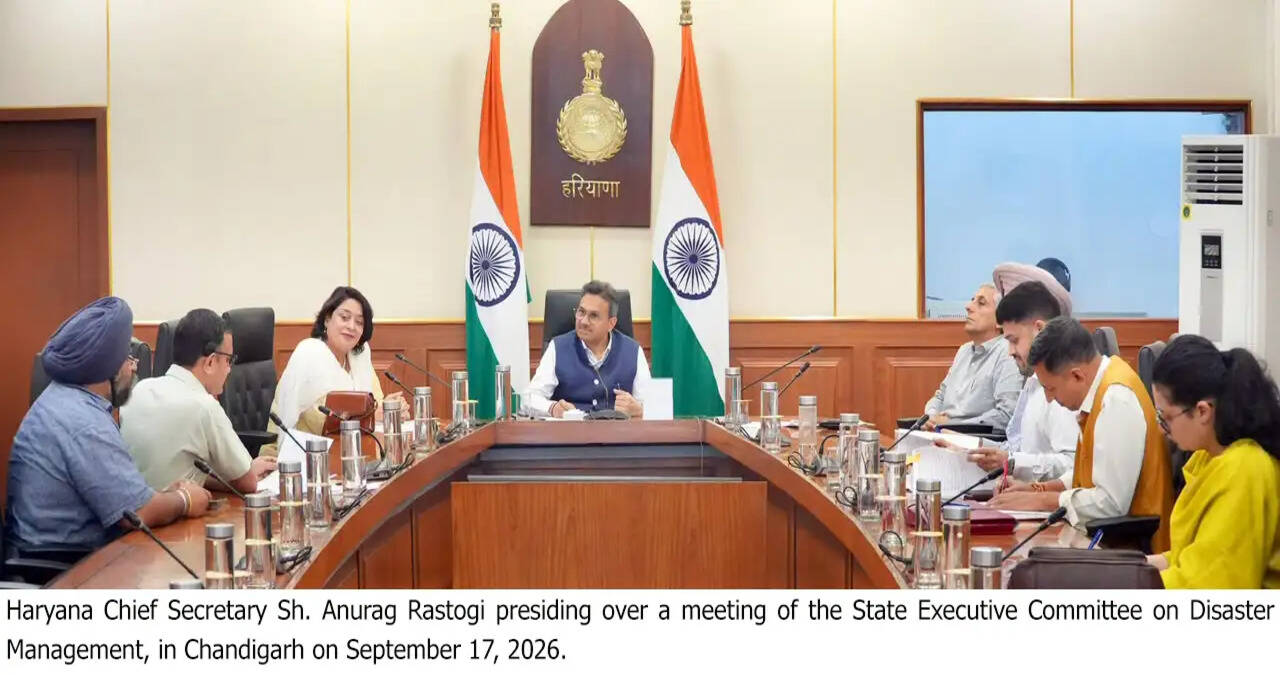

Chandigarh, September 17 - Haryana has screened 7.22 lakh people and detected 45,090 tuberculosis patients under its extended TB campaign, while coverage of preventive treatment for eligible household contacts has more than doubled from 31 per cent to 67 per cent since June 2026, a progress report reviewed by Additional Chief Secretary, Health, Dr. Sumita Misra on Thursday.
The state is now further strengthening the TB service network by expanding TB Units and planning to establish TB Units at all Community Health Centres (CHCs) and Sub-Divisional Hospitals (SDHs), bringing screening, diagnosis, treatment and follow-up services closer to the community. Currently TB units are already established at 195 District and sub district hospitals, CHCs and PHCs.
Reviewing the National TB Elimination Programme (NTEP), Dr. Misra took a district-wise assessment of screening, diagnosis, preventive treatment, differentiated TB care, nutritional support and the use of digital tools.
The extended campaign, conducted from March 24 to September 14, saw 5,221 camps organised, including 3,214 in high-risk villages. Of the 7.22 lakh people screened, 3.66 lakh underwent chest X-rays, while 2.15 lakh molecular tests were conducted.
A significant improvement was recorded in TB Preventive Treatment (TPT) for household contacts of pulmonary drug-sensitive TB patients. By September 14, 31,580 of 47,322 eligible household contacts had been provided preventive treatment, taking coverage to 67 per cent from 31 per cent on June 24. Eighteen districts crossed 50 per cent coverage and no district remained in the red zone. The programme uses the 3HP regimen—one dose a week for three months.
The state has simultaneously increased the use of rapid molecular diagnosis. NAAT testing reached 2.15 lakh, raising its share to 71 per cent from 61 per cent in June 2026. Five districts recorded more than 80 per cent coverage, while all districts crossed the 50-per-cent mark.
Chest X-ray screening increased from 1.74 lakh on June 24 to 3.67 lakh by September 14, with overall coverage rising from 43 per cent to 51 per cent. All 23 districts recorded coverage above 35 per cent, leaving none in the red zone.
Patient-focused care also expanded during the period. Under differentiated TB care, 31,617 of 45,090 eligible patients were assessed, taking coverage to 71 per cent from 60 per cent in June.
Nutritional support has also expanded. Under the Nikshay Mitra Scheme, 28,611 TB patients received Poshan Kits, representing 61 per cent of 47,196 consenting patients. The state aims to achieve 100 per cent coverage of eligible and consenting patients through strengthened mobilisation of Nikshay Mitras.
The review further showed that 59,068 beneficiaries were eligible for Nikshay Poshan Yojana direct benefit transfers. The report records ₹1 crore as paid to 1,727 beneficiaries, while 9,000 beneficiaries involving ₹3.75 crore had been processed.
Haryana has also expanded its TB diagnostic infrastructure. The state now has 23 District TB Centres, 168 TB Units and 452 TB Detection Centres, along with 46 Cartridge-Based Nucleic Acid Amplification Test (CBNAAT) and 248 Truenat machines capable of TB testing along with rifampicin resistance. Of the Truenat machines, 150 were donated by BPCL under its CSR initiative.
Two Culture and Drug Susceptibility Testing laboratories at PGIMS Rohtak and IRL Karnal provide testing for advanced resistance patterns involving rifampicin, isoniazid, fluoroquinolone and linezolid, besides follow-up culture testing of multidrug-resistant TB cases.
Registrations on the TB Mukt Bharat App/Khushi Chatbot rose from 30,829 in June to 45,914 by September 14, including 20,170 TB patients, 23,266 volunteers and 2,307 Nikshay Mitras.
Dr. Misra directed health officials to continue district-wise monitoring and strengthen the last-mile TB service network. The proposed expansion of TB Units to all CHCs and SDHs is aimed at ensuring that people can access TB screening, diagnostic services, treatment linkage and follow-up closer to their homes.
The review highlighted gains across screening, molecular diagnosis, preventive treatment, differentiated patient care and nutritional support, while emphasising the need to sustain the momentum towards TB Mukt Haryana and TB Mukt Bharat