
11 Bills Passed After Discussion on the Final Day of Haryana Vidhan Sabha Monsoon Session

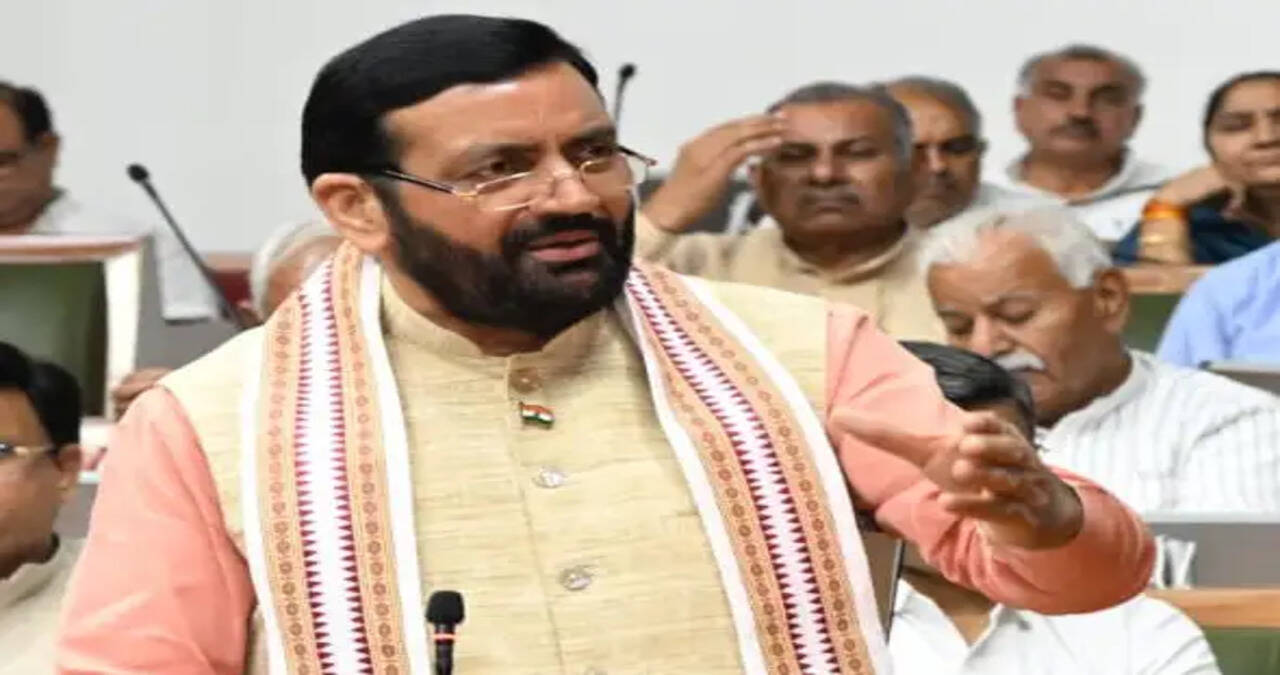

Chandigarh, September 1 – On the final day of the Monsoon Session of the Haryana Vidhan Sabha, 11 Bills were passed after discussion. The Bills passed included the Haryana Appropriation (No. 3) Bill, 2026, the Haryana State Commission for Minorities Bill, 2026, the Haryana Village Common Lands (Regulation) Amendment Bill, 2026, the Haryana Local Audit Bill, 2026, the Haryana Private Universities (Amendment) Bill, 2026, the Haryana State Commission for Women (Amendment) Bill, 2026, the Haryana Goods and Services Tax (Amendment) Bill, 2026, the Haryana Panchayati Raj (Amendment) Bill, 2026, the Haryana State Council for Physiotherapy (Repeal) Bill, 2026, the Haryana Law Officers (Engagement) Amendment Bill, 2026 and the Haryana Right to Business Bill, 2026.
*Haryana Appropriation (No. 3) Bill, 2026*
The Haryana Appropriation (No. 3) Bill, 2026 has been passed to authorise the payment and appropriation of a total amount of Rs. 7,136,63,25,000 (Rupees seven thousand one hundred thirty-six crore, sixty-three lakh, twenty-five thousand only) out of the Consolidated Fund of the State of Haryana for the services during the financial year 2026-27 ending on the thirty-first day of March, 2027.
*Haryana State Commission for Minorities Bill, 2026*
The Haryana State Commission for Minorities Bill, 2026 has been passed for constituting a Commission for Minorities in the State of Haryana for the purpose of protecting the interests and safeguards of minorities, making recommendations regarding the additional social, economic, educational and cultural requirements of religious and linguistic minorities, preserving secular traditions and promoting national integration, and for matters connected therewith or incidental thereto.
The establishment of the Haryana State Commission for Minorities is proposed to provide an institutional mechanism at the State level, so that the safeguards provided under the Constitution and laws for the protection of minorities can be evaluated and recommendations can be made for the effective implementation of such safeguards and laws in the State of Haryana.
The Commission having statutory status will create confidence among minority communities regarding its functioning and effectiveness. This will give greater importance to the recommendations of the Commission before the State Government, departments, boards, corporations, local authorities and other organisations concerned with the welfare and development of minorities. Therefore, it has been decided through the proposed Bill to provide statutory status to the Haryana State Commission for Minorities.
The main functions of the Commission will be to evaluate the progress of the development of minorities in the State, monitor the implementation of safeguards provided under the Constitution and laws for the protection of the interests of minorities, and inquire into specific complaints regarding deprivation of the rights and safeguards of minorities. The Commission will also undertake studies, research and analysis on matters relating to the socio-economic and educational development of minorities and make recommendations regarding the effective implementation of safeguards and appropriate measures to be adopted by the State Government.
*Haryana Village Common Lands (Regulation) Amendment Bill, 2026*
The Haryana Village Common Lands (Regulation) Amendment Bill, 2026 has been passed to amend the Haryana Village Common Lands (Regulation) Act, 1961.
Under the existing provisions, the Director, Development and Panchayats Department, is authorised to grant approval to Gram Panchayats for selling land situated in their Shamlat Deh to applicants who had constructed their houses on Shamlat land on or before March 31, 2004. At present, a large number of applications are pending approval at different levels. In order to expedite the process of granting such approval and provide timely relief to eligible applicants, it is necessary to delegate the power of granting approval to the concerned Deputy Commissioner. This decentralisation of powers will help in taking decisions quickly and reducing the number of pending cases.
*Haryana Local Audit Bill, 2026*
The Haryana Local Audit Bill, 2026 has been passed to provide for an effective and efficient audit system for all local authorities and other authorities, bodies or institutions and local funds, and for matters connected therewith and incidental thereto.
In view of the Acts/rules governing the local audit departments of other States in India and the similar functioning of the Local Audit Department, Haryana, there is also a need to prepare an Act for the Department so as to provide a strong statutory framework which will empower the Local Audit Department, Haryana, to conduct independent, time-bound and effective audits of local bodies (Panchayati Raj Institutions and Urban Local Bodies) and other diverse local fund institutions such as all State Universities, the Board of School Education, Bhiwani, Maharaja Agrasen Medical College, Government/Government-aided High Schools, Senior Secondary Schools, Colleges and any other authority, body or institution established by or under any law or order of the Government, and any other fund which the Government may, by notification in the Official Gazette, declare to be a local fund for the purposes of this Act.
Strong legal powers are required to enforce the accountability of audited institutions towards auditors or to compel them to produce records. This is necessary to develop a stringent legal mechanism to ensure that local authorities respond to audit paragraphs (audit objections) within a specified time limit. The Act will legally empower the Director, Local Audit, to directly issue surcharge notices to persons responsible for financial irregularities. The Act will provide statutory support that protects the audit framework from local political or administrative interference. It mandates a statutory time limit for submitting annual audit reports to the State Legislature, while ensuring transparency.
*Haryana Private Universities (Amendment) Bill, 2026*
The Haryana Private Universities (Amendment) Bill, 2026 has been passed to amend the Haryana Private Universities Act, 2006.
There is a need for the structure and expansion of educational institutions to provide better opportunities in higher education to the youth of the State. In order to accommodate the unprecedented growth in the number of students in higher education and also to achieve a 50 per cent Gross Enrolment Ratio as per the National Education Policy, 2020, there is also a need to roughly double the number of institutions at all levels by the year 2030. Government intervention alone will not be sufficient to achieve this target in higher education. Private sector participation needs to be included in a major way. The Haryana Private Universities Act, 2006 has necessarily been brought in to supplement the Government's initiative in expanding the capacity and scale of higher education and its standards.
In addition, a proposal has been put forward for establishing Kusum International University in District Rewari and Masters Union University in District Gurugram, for achieving the objectives mentioned in the Act.
*Haryana State Commission for Women (Amendment) Bill, 2026*
The Haryana State Commission for Women (Amendment) Bill, 2026 has been passed to amend the Haryana State Commission for Women Act, 2012.
The Haryana State Commission for Women has been constituted under the Haryana State Commission for Women Act, 2012 (Haryana Act No. 27 of 2012). The Commission has been entrusted with the statutory responsibility of protecting and promoting the rights and interests of women in the State.
Over the past few years, there has been an increase in the number of complaints, memoranda and other matters relating to women. As a result, the workload and responsibilities of the Commission have also increased considerably. At present, there are five non-official members in the Commission. In view of the increased workload, this number is not sufficient for the effective and expeditious disposal of the functions of the Commission. Therefore, in order to strengthen the efficiency and institutional capacity of the Commission, it has been considered necessary to amend Section 3(2)(b) of the Haryana State Commission for Women Act, 2012. Under this, it is proposed to increase the number of non-official members from five to seven.
Since the Haryana Vidhan Sabha was not in session at that time and immediate action was necessary, the Governor of Haryana promulgated the Haryana State Commission for Women (Amendment) Ordinance, 2026 on July 9, 2026. Through this Ordinance, the word “five” in clause (b) of sub-section (2) of Section 3 of the Act was replaced with the word “seven”. Now, in order to replace the said Ordinance and duly give effect to the amendment made, the Haryana State Commission for Women (Amendment) Bill, 2026 has been introduced. Therefore, it is necessary to enact this Bill to permanently give effect to the said amendment in the Haryana State Commission for Women Act, 2012.
*Haryana Goods and Services Tax (Amendment) Bill, 2026*
The Haryana Goods and Services Tax (Amendment) Bill, 2026 has been passed to amend the Haryana Goods and Services Tax Act, 2017.
The Haryana Goods and Services Tax Act, 2017 (the Act) was enacted by the State Government with the object of providing for levy and collection of tax on intra-State supply of goods or services or both.
Based on the recommendations of the GST Council and on the lines of the amendments made to the Central Goods and Services Tax Act, 2017 by the Finance Act, 2026 (Central Act No. 4 of 2026), amendments are proposed to the Haryana Goods and Services Tax Act, 2017. The proposed Haryana Goods and Services Tax (Amendment) Bill, 2026 seeks to amend sub-section (3) of Section 15 of the Act to remove the requirement of specifically linking post-sale discounts to the agreement pertaining to the relevant invoice and to provide for reference to issuance of a credit note under Section 34 when the input tax credit is to be reversed by the recipient; amend Section 34 of the Act so as to include in this section a reference to the discount specified in clause (b) of sub-section (3) of Section 15 for the purpose of issuing credit notes for post-sale discounts; and amend sub-section (6) of Section 54 of the Act so that the provisions relating to provisional refund may also be made applicable to refunds arising from an inverted duty structure.
*Haryana Panchayati Raj (Amendment) Bill, 2026*
The Haryana Panchayati Raj (Amendment) Bill, 2026 has been passed to amend the Haryana Panchayati Raj Act, 1994.
Under the existing provisions of the Haryana Panchayati Raj Act, 1994, a higher quorum than that required for an ordinary meeting has been prescribed for a Gram Sabha meeting for considering and approving eligible beneficiaries identified for government schemes and for preparing the Gram Panchayat Development Plan, so as to ensure greater participation of members and maintain transparency and accountability in the process.
It is becoming difficult to achieve the prescribed quorum of 40 per cent attendance in the main meeting, 30 per cent in the first adjourned meeting and 20 per cent in the second adjourned meeting, and the required proceedings are not taking place. Due to the required proceedings not being conducted in the meetings, there is a delay in implementing government schemes. Therefore, in order to rationalise the requirement of quorum, it is proposed to prescribe the attendance of 20 per cent of the total members in the main meeting, 15 per cent in the first adjourned meeting and the prescribed number of members in the second adjourned meeting as the quorum. The proposed amendment aims to strike a balance between the objective of ensuring adequate public participation and transparency in the Gram Sabha and the practical need for Gram Sabha meetings to effectively and timely perform their assigned functions.
*Haryana State Council for Physiotherapy (Repeal) Bill, 2026*
The Haryana State Council for Physiotherapy (Repeal) Bill, 2026 has been passed to repeal the Haryana State Council for Physiotherapy Act, 2020.
The Haryana State Council for Physiotherapy was constituted under the Haryana State Council for Physiotherapy Act, 2020, with the objective of regulating the profession of physiotherapy in the State, including registration of physiotherapists, maintenance of registers, regulation of educational institutions and courses, and ensuring professional standards and ethical conduct.
Subsequently, the Central Government enacted the National Commission for Allied and Healthcare Professions Act, 2021, which provides for regulation and maintenance of standards of education and services for allied and healthcare professions and constitution of State Allied and Healthcare Councils. Physiotherapy has been included as an allied and healthcare profession under the said Central Act. In pursuance of the provisions of the said Central Act, the Haryana State Allied and Healthcare Council has been constituted. In view of the statutory framework established under the Central Act, it is necessary to bring the regulatory functions relating to physiotherapy under an integrated framework.
Therefore, with the objective of ensuring a smooth transition under the integrated regulatory framework, it is proposed to enact the Haryana State Council for Physiotherapy (Repeal) Bill, 2026 to repeal the Haryana State Council for Physiotherapy Act, 2020. The proposed Bill contains necessary savings and transitional provisions so that the validity and continuity of actions taken under the Act of 2020, including registrations, continuity of proceedings, and transfer of assets, liabilities and personnel to the State Allied and Healthcare Council, remain protected.
This repeal is not likely to entail any additional financial burden on the State Government, as the expenditure will be met from the resources of the concerned Council.
*Haryana Law Officers (Engagement) Amendment Bill, 2026*
The Haryana Law Officers (Engagement) Amendment Bill, 2026 has been passed to amend the Haryana Law Officers (Engagement) Act, 2016.
The Haryana Law Officers (Engagement) Act, 2016 was notified on September 14, 2016, with the objective of providing a transparent, fair and objective system for the engagement of Law Officers in the office of the Advocate General of Haryana and for matters connected therewith or incidental thereto. Keeping in view the changed scenario and particularly with the implementation of the “Bharatiya Nyaya Sanhita, 2023”, under which approximately twenty new offences have been added, imprisonment terms and the amount of fines have been increased for several offences, and provision has also been made for punishment of community service for certain offences, there is a need to increase the number of advocates to be appointed under the proviso to sub-section (3) of Section 6 of the Act, on the basis of special qualifications and experience, from 10 to 15 to deal with cases of a special nature.
*Haryana Right to Business Bill, 2026*
The Haryana Right to Business Bill, 2026 has been passed to provide for self-certification, exemptions, expedited approvals, inspections through an enabling mechanism for facilitating the establishment and operation of eligible enterprises in the State of Haryana, and for matters connected therewith or incidental thereto.
Under the existing regulatory framework governing the establishment and operation of business enterprises in Haryana, entrepreneurs are required to obtain multiple approvals, licences and registrations from various government authorities before commencing operations. Such approvals are often processed sequentially by different State agencies, resulting in prolonged delays and significant procedural burdens for businesses, particularly micro, small and medium enterprises, which generally have limited financial and administrative resources.
The requirement to obtain all statutory approvals before establishment has hindered industrial development, entrepreneurship and innovation in the State. To address these challenges, it is proposed to introduce an enabling framework based on the principle of “Right to Business”, with the objective of promoting ease of doing business by reducing unnecessary procedural delays while ensuring compliance with applicable laws, regulatory standards and public safety requirements.
The Haryana Right to Business Bill, 2026 aims to provide a system of time-bound, in-principle pre-establishment approvals that will allow eligible enterprises to commence business activities subject to prescribed conditions, while the process for obtaining the original approvals continues in parallel.
The Bill is in line with the broader approach of the Government of “minimum government, maximum governance” and aims to promote an investor-friendly regulatory environment that encourages entrepreneurship and facilitates ease of doing business. It proposes a framework for providing eligible enterprises with one-time in-principle pre-establishment approvals, licences and No Objection Certificates, enabling them to commence operations expeditiously while complying with applicable statutory provisions. At present, the regulatory ecosystem presents significant entry barriers for new enterprises because it involves a fragmented, multi-agency approval process under which entrepreneurs are required to obtain multiple approvals and licences before establishing a business. To address these challenges, the Bill introduces a streamlined system of in-principle pre-establishment approvals, which will reduce procedural burdens, accelerate the establishment of businesses and create a more conducive environment for investment and enterprise development in the State.
The Bill facilitates the process of filing a declaration of intent by eligible enterprises to commence operations and provides them exemption from specified State-level inspections and approvals for a specified period, enabling them to establish and operate their businesses with ease. The Bill provides a prescribed time limit for granting an in-principle approval certificate and, where a decision on the in-principle approval is not taken within the prescribed period, introduces the concept of deemed approval.
The Bill allows eligible enterprises a moratorium period of thirty-six months to obtain all necessary statutory approvals. The Bill restricts inspections and penal action during the moratorium period, except in specified cases based on serious complaints, unauthorised construction, violations of land-use regulations, or matters relating to public safety, structural integrity and fire safety. The Bill establishes a system of appeals and grievance redressal to protect the interests of eligible enterprises and ensure accountability in decision-making. The responsibility for facilitation and grievance redressal will be assigned to nodal agencies at the State and district levels.